
 German
  Polish
  English
  Czech
Czech  Spanish
  Italian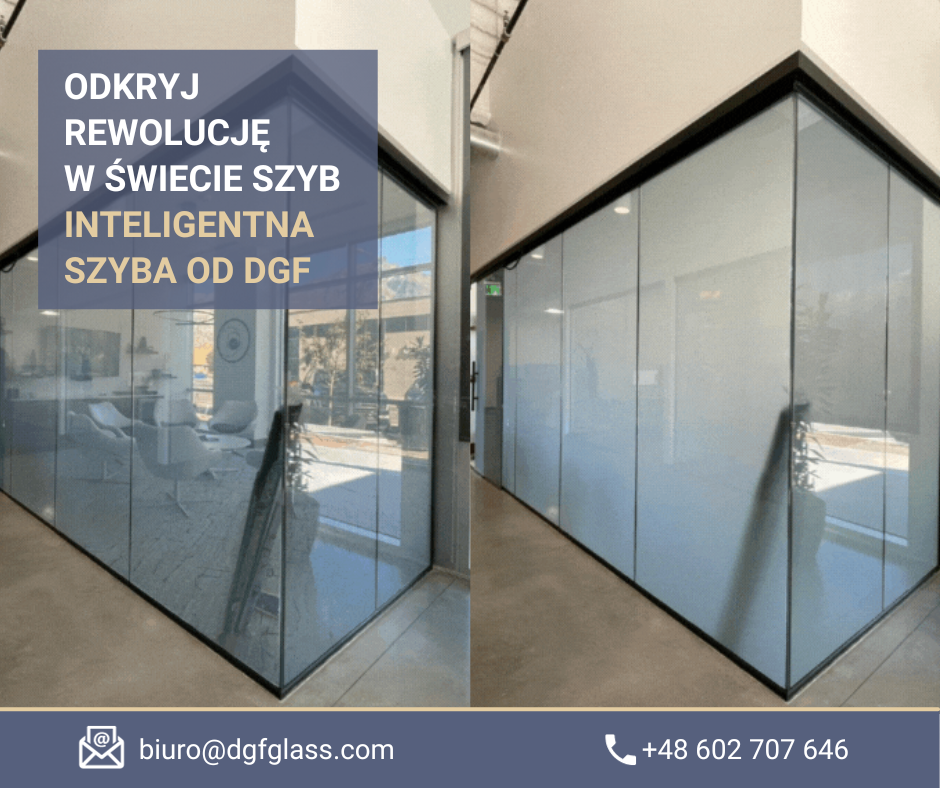
“Smart glass” is used for several technologies. In one, an active PDLC layer is permanently laminated between glass panes as part of a finished unit. In another, adhesive switchable film is applied to existing glazing. The user may see a similar goal, but the architect and contractor are dealing with different products.
There is no single answer for every interior. A new meeting room designed from scratch offers different possibilities from an operating consulting room where a large pane cannot be replaced. Compare construction, installation, appearance and future service—not slogans alone.
1. The difference starts inside the glazing
In smart glass the active layer sits within the glazing build-up. Dimensions, shape, cable exit and any zoning are set before manufacture. The finished pane is installed in the agreed frame or joinery as an engineered glazing element.
Applied film is a separate layer installed on the accessible face of existing glass. It can reduce construction work but requires excellent substrate preparation, precise application and deliberate edge finishing. Wiring and terminations depend on the existing geometry.
2. New construction and retrofit have different priorities
A new project can coordinate frame, rebate depth, power supply, cable route and controls in advance. This suits a laminated solution with a clean detail. Final dimensions and coordination are essential because an active pane cannot simply be trimmed on site.
In retrofit, glass replacement, downtime or rebuilding the partition may be the main constraint. Film can then be worth assessing. It is not enough to say it can be applied to any pane: substrate, access, edges, wiring, use and expected appearance all need review.
3. Light and detailing—not only a sample—determine the effect
The clear PDLC state is not identical to completely neutral glass, while the frosted state transmits diffused light. Perception depends on viewing angle, area, lighting and distance. A sample should be viewed in both states and close to final conditions.
The perimeter matters just as much. A profile may conceal the cable exit, a joint may reinforce the composition and an improvised trim may spoil it. Wiring and connections belong in the detail from the beginning, whichever technology is selected.
4. Service must be planned before installation
The power supply, controller and connections should be accessible without dismantling finished architecture. It should also be clear who diagnoses faults: glazier, electrician, integrator or facility manager. A labelled diagram and circuits simplify later service.
Laminated panes and film have different repair and replacement procedures. In the first, the active layer is part of the glass; in the second it remains on the surface. This matters for lifecycle planning, especially in daily-use and repeated projects.
5. A simple selection matrix
For a new high-quality partition where every detail can be designed, laminated glass is a natural starting point. In an existing facility where replacement is disproportionately difficult, applied film may be the better first option. Zoning, unusual shapes and specific constructions require feasibility confirmation.
In both cases the same function questions apply: whose view is screened, when, how users control it and which state is right without power. Cost, works and appearance come next. Technology then answers the project instead of the project bending around a product.