
 Spanish
 Polish
 English
 Czech
 German
 Italian
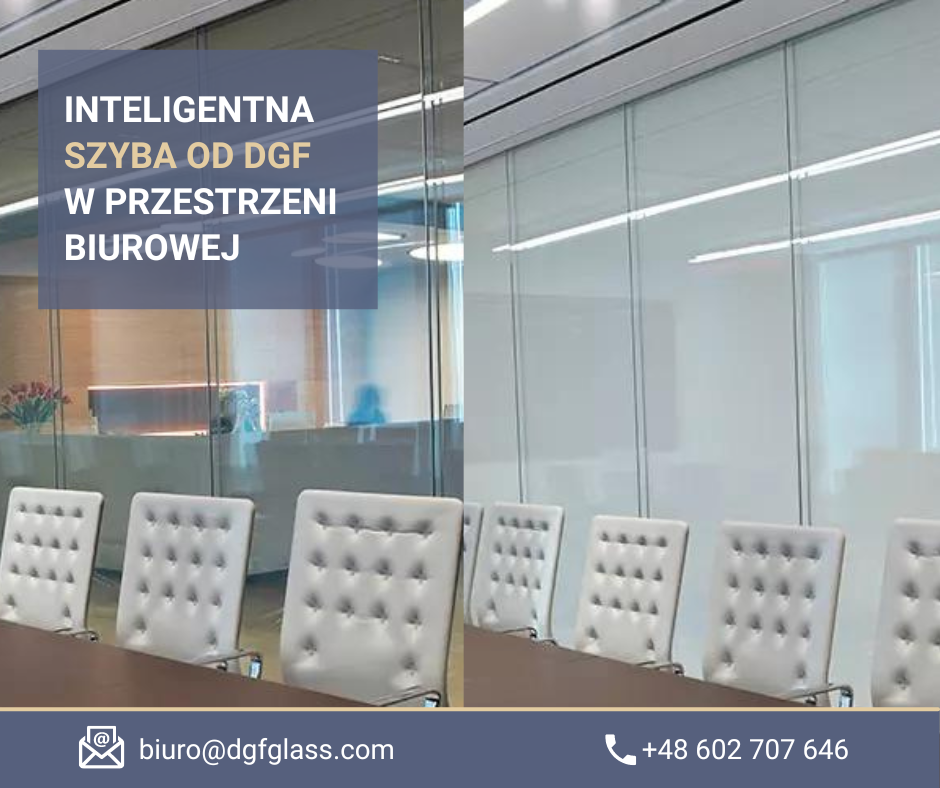
A glazed wall in a room, consulting space or home often needs to solve several needs. Views should be open in ordinary use, confidential meetings should not be observed, screens stay usable and conversation should not reach the corridor. These goals share the word privacy but need different decisions.
The greatest mistake is expecting changing transparency to solve all of them automatically. PDLC is a view function. Acoustic performance and blackout belong to the complete partition and its surroundings.
1. Visual privacy: what PDLC can do
When power is removed, a typical PDLC pane becomes frosted: light is scattered and recognisable imagery is limited. This works where direct sight through glazed partition should stop without giving up all light.
Effect depends on distance, viewing angle and lighting contrast. Strong backlighting can reveal shadows. It should not be described as complete invisibility in every condition; light testing is part of honest selection.
| Requirement | What delivers it | How to confirm |
|---|---|---|
| View screening | Active pane and suitable lighting | Test both states from intended viewpoints |
| Conversation privacy | Complete partition, doors and interfaces | Design and documentation for the specified configuration |
| Blackout | Separately selected light screening | Assessment in presentation or sleeping conditions |
2. Acoustic privacy: design the entire sound path
Conversation does not travel only through the middle of the pane. It can pass through glass, door, frame gaps, above ceiling, at floor, service penetrations and ventilation. A glass name or single-layer thickness cannot promise a room result.
Where confidential conversation is the goal, the design should define required result for the complete wall and coordinate relevant trades. DGF can coordinate active-glass function with the partition solution, but acoustics should not be attributed to it alone.
3. Blackout and light control are a third topic
Frosted glass does not act like a blackout blind. It can limit images and change light character, but screen work, projection or sleep require separate assessment of sources, orientation, other shading and use.
This distinction prevents disappointment: one partition can combine active privacy, acoustic performance and separate light control, but each layer must be specified and confirmed for the configuration.
4. How to brief without the vague word privacy
Instead of saying it should be private, describe a scenario: corridor must not see a screen during a meeting; a consulting-room conversation must not be heard outside; presentation must remain readable in daytime. Each statement directs design to a different system part.
Also identify the power-failure state and who controls the glass. This designs everyday use without hidden assumptions.
5. Questions before quotation
This list does not replace acoustic design or partition assessment. It helps separate tasks sooner and send them to the right people.
- who should not see the interior and from where
- whether conversation must not be heard and on which side
- whether blackout or only view screening is required
- what doors, frames, ceiling, floor and service penetrations exist
- what lighting is like in daytime and after dark
In practice: One answer that glass provides privacy is not sufficient. Name the type of privacy and conditions in which it must work.