 Czech
Czech  Polish
  English
  German
  Spanish
  Italian
 Colour remains part of the material
Control changes the state of transparency, not an arbitrary colour. The pane therefore keeps a consistent identity both as a clear partition and as a frosted surface.

Switchable coloured active glass
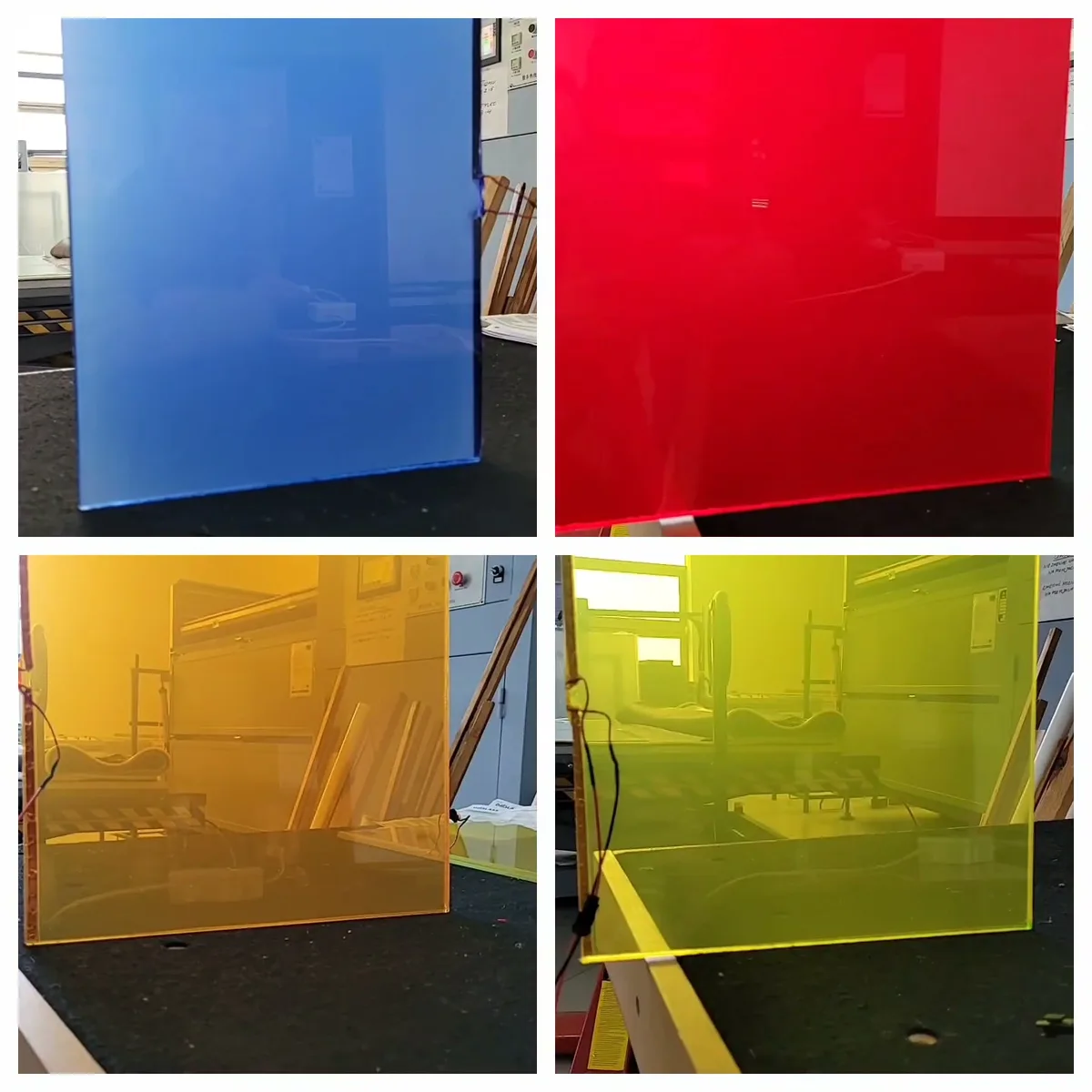
Active glass in colour variants combines privacy control with a distinctive design effect. Colour is not an accessory; it becomes part of the material palette.
DGF solution
DGF Colour switchable active glass adds a considered colour effect to switchable glazing. The pane still controls privacy while shaping atmosphere and recognition.
The final variant follows light conditions, surrounding materials and the desired effect. Samples are part of the design decision because perceived colour depends on context.
How the solution works
DGF Colour combines the active layer responsible for switching between clear and frosted states with a selected colour effect. The colour is not a digital filter changed in an app. It is a property of the prepared glass composition, selected for the materials, lighting and scale of a particular interior.
The same sample will look different against a pale wall, dark joinery or a brightly lit lobby. Switching state also changes how light is diffused. For this reason the colour variant is confirmed on a physical sample and assessed in two views: active glass and frosted glass.
Important: a phone screen or visualisation cannot reproduce the colour and transparency of glass faithfully. The final decision should be based on a physical sample viewed beside the intended materials and in comparable light.
Control changes the state of transparency, not an arbitrary colour. The pane therefore keeps a consistent identity both as a clear partition and as a frosted surface.
Light temperature, sun direction and the background affect saturation and depth. We therefore assess the glass in daylight and artificial light, not only on a white sample table.
When PDLC scatters light, the colour reads more like a surface than a transparent filter. This can become a deliberate accent in reception, wellness or display areas.
For several panes we define one approved variant and reference. Dimensions, installation orientation and surroundings should be documented together so the glazed field reads as one composition.
What you gain
The result is not defined by one parameter. It comes from the right pane, considered controls and installation detailing.
The pane joins the interior palette instead of remaining a neutral background.
Switching state changes privacy and the perception of colour at the same time.
Selection is confirmed on a physical sample viewed in the project context.
Power and controls are planned as carefully as the interior detailing.
From concept to commissioning
We define the role of colour, light conditions and adjacent materials.
We assess the clear and active states, ideally in the intended surroundings.
After sample approval, we engineer the pane, cable exits and control method.
Space and purpose
A coloured pane should not be an arbitrary special effect. The best results come from the interior palette, usage and how the glass appears in both states throughout the day.
Hotel, apartment and wellness
A partition beside a bathroom, spa or suite can retain a subtle tone matching timber, stone and metal when clear, then become a calm coloured backdrop when switched. The sample should be assessed in daylight and evening lighting because a hotel night scene can change colour perception completely.
Reception, showroom and display
In a reception or showroom colour can organise zones, reinforce the brand palette and change the character of a display backdrop. Viewing distance matters: a small sample shows the hue, but only an assessment of the full area helps set its intensity within the whole interior.
Home and bespoke interior
At home the hue can relate to joinery, textiles or metal so the active pane becomes part of the material language. It must be viewed from both rooms: the same partition may have a pale background from the living room and a dark one from the dressing room, changing its appearance.
A project, not a gadget
That is why the decision is not based on a tiny swatch. We present a physical sample, switching action and the way the material responds to light before producing the final pane.
View DGF projectsProduct specifications
Every pane is technically confirmed for its final dimensions and installation. The values below describe the base product configuration.
Ask about your dimensions| Effect | colour + switchable transparency |
|---|---|
| Variant selection | consultation and physical sample |
| Base glass | Opti White Pilkington, 4 mm |
| Layers | EVA 0.8 mm + active layer |
| Power | 48 V DC |
| Energy use | ~1 W/m² |
| Dimensions | made to project |
Informed selection
The hue must be considered in relation to area, light and neighbouring materials. This process separates intentional design from an accent that only looked convincing in a visualisation.
Provide samples or references for key finishes: metal, wall covering, stone and joinery. Glass colour is selected as part of that composition.
The same variant must work as a transparent layer and a frosted plane. Assessing only one state creates surprises after commissioning.
Record daylight direction, luminaire temperature and evening scenes. The glass colour will interact with all of them.
A hue may feel subtle on a sample but dominate across many square metres. The size of the glazed area affects the selection.
Solution family
Not every project needs the same configuration. Compare the core roles and confirm the details during consultation.
Knowledge before a decision
DGF Colour combines material and technical decisions. These guides help assess PDLC properties, solution limits and the role of an active surface in architecture.
Questions before a project
Pricing depends on dimensions, pane count, controls and installation. A few answers usually identify the right direction.
It changes slightly with light and surrounding materials. That is why we confirm the variant on a physical sample, not only on screen.
Yes. It is switchable active glass enhanced with a colour effect.
With a short consultation covering room function, light, the material palette and the desired character.
No. Controls switch the glass between clear and frosted states. The selected colour effect is part of the physical pane composition and is therefore confirmed before manufacture from available variants and a sample.
Perception is affected by surface area, background colour, light direction, luminaire temperature and viewpoint. The sample should therefore be viewed beside the intended finishes and in both glass states.
They are designed as one set with a shared approved variant, but structural joints, different backgrounds and lighting can affect each field. Pane layout and installation orientation should be documented.
It should not be assumed to match an opaque paint or printed RAL reference exactly. Glass interacts with light, background and transparency, so selection is based on available variants and a physical sample viewed beside the intended finishes.
Each colour composition affects appearance and light transmission differently. Area, orientation and background also matter, so there is no single universal result; the appropriate variant is confirmed with a sample and the project context.
Price depends on pane dimensions and quantity, the selected composition, glazing build-up, samples, framing, power, controls and installation. For larger surfaces, pane layout and sequence are also part of the scope.
Technical consultation
Project and quotation
Include indicative dimensions, room type and expected effect. You can also start with a photo or plan sent in your email reply.
Jasionka 954 Aeropolis