
 Italian
  Polish
  English
  Czech
Czech  German
  Spanish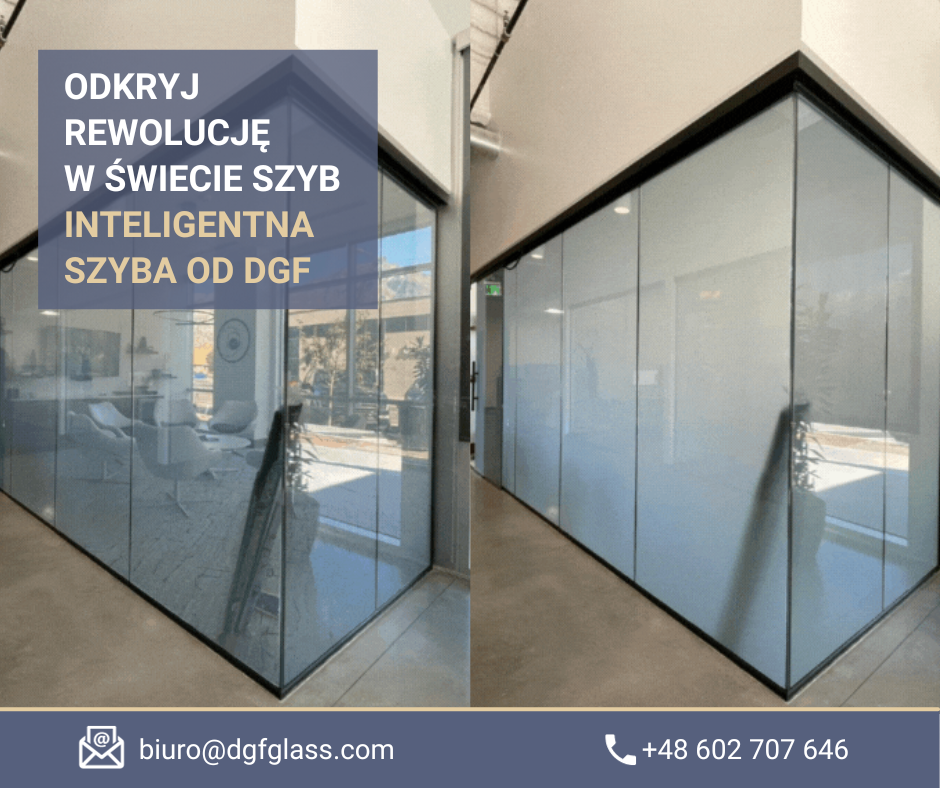
Search results often group both technologies together. This creates the false expectation that frosted PDLC will darken a room like a blind or that electrochromic glazing will create an opaque wall in a second. The differences come from their physical principles.
DGF designs PDLC solutions. This comparison does not claim one technology is always better. It helps reject the wrong tool early and prevents specifications from mixing parameters that belong to different glass types.
1. PDLC scatters light and obscures recognisable images
In a PDLC layer, liquid crystals change alignment when powered. In the powered state an image passes through the pane, although optics are not identical to neutral glass. Without power, light is scattered and the surface appears frosted.
The change is very fast and suits moments when a user makes a simple decision: open or private. Light levels and shadow visibility still depend on lighting, angle and distance.
2. Electrochromism gradually changes tint and transmission
Electrochromic glass changes material optical properties under voltage and moves between lighter and darker states. The process can be gradual, with timing affected by area, temperature and the specific product.
Its typical role is daylight, glare or solar-energy control in external glazing. It should not be assumed to create the same neutral frosted privacy surface as PDLC.
| Criterion | PDLC | Electrochromic |
|---|---|---|
| Primary task | Privacy and image visibility | Tint and daylight |
| Change character | Clear ↔ frosted | Lighter ↔ darker |
| Speed | Very fast switching | Usually gradual change |
| Typical location | Partitions, doors, bathrooms, offices | Facades and external glazing |
3. Privacy, blackout and solar control are separate requirements
Visual privacy means obscuring recognisable views. Blackout means very strong light reduction. Solar control concerns energy and thermal comfort. One technology does not have to satisfy all three goals.
If a room needs privacy during a meeting, PDLC can be the right starting point. If a bedroom needs darkness, a blackout screen may still be required. If a facade must control overheating and glare, the designer should assess the complete glazing and dedicated solar solutions.
4. Power and failure state belong in the operating scenario
Typical DGF PDLC glass is frosted without power. In the clear state it consumes power according to active area and configuration. Power supplies, circuits and controls should remain accessible and documented.
Electrochromic products may have different power requirements and product-dependent state memory. Behaviour must not be transferred between technologies. The design should state what users see in normal operation, during power loss and after restart.
5. How to choose the direction in five questions
First state the required result: a frosted surface, darker pane, hidden view, reduced glare or solar protection. Then define change time, installation location, lighting and required power-loss behaviour.
For an initial PDLC assessment, a photo or plan, indicative dimensions, view description and project stage are enough. DGF will identify whether switchable privacy fits and what must be closed before quotation and manufacture.